What are succulents?
By: Maggie & Pippa C.
Date: 28 February 2026
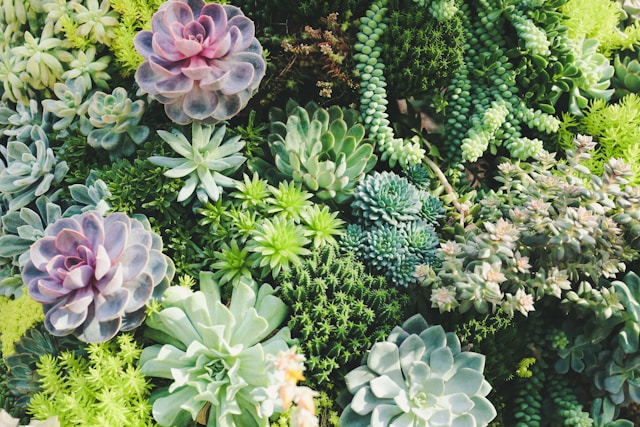
What it is
Succulent plants are a broad group of plants known for their thick, fleshy leaves, stems or roots that act like water tanks. They’ve evolved this way so they can survive in dry or drought-prone areas around the world. The word "succulent" doesn’t point to a single plant family — it’s a description of how they work, not a scientific classification. In Japanese the word literally means "fleshy plants", which fits their juicy look.
These water-saving adaptations allow succulents to live in places like deserts, semi-deserts, rocky hillsides, and sandy soils, where rain can be rare and temperatures can be high. Many species thrive in Africa (especially the south), Mexico and Madagascar, but you can find them on all continents except Antarctica.
What makes it special
The main thing about succulents is their ability to store water. Unlike most plants, parts of a succulent — especially the leaves or stem — can hold a lot of water, sometimes up to 90-95 % of their weight. This storage helps them survive long dry spells with very little rainfall. Their thick tissues act like built-in reservoirs.
Many succulents also use a special form of photosynthesis called "crassulacean acid metabolism" (CAM), which lets them open tiny pores (stomata) at night to take in carbon dioxide while keeping water loss at a minimum during hot days. That’s part of how they stay efficient in really dry environments.
Succulents aren’t all the same shape — some have round, plump leaves, others have thick stems instead of leaves, and some even store water in their roots. But most share the same goal: retain as much moisture as possible so they don’t dry out.
How it looks
Succulents tend to have unusual, eye-catching shapes and textures. Some look like tiny rosettes, others like spiky columns, and a few even resemble stones or pebbles — all tricks to survive bright sun and low water. Their colours range from bright green to blue-green, purple, red or silver, depending on species and light exposure.
Many growers love succulents because they’re visually interesting and can be displayed in small spaces, containers, or rock gardens. Some popular types seen in homes and gardens include plants like aloe, jade, echeveria and stonecrop.
Where it is found
Succulents originally evolved in dry, low-rainfall climates — deserts, semi-deserts, and rocky landscapes where plants compete for every drop of water. Their thick leaves and specialized tissues give them a big advantage in these tough conditions. But you can now find many succulents in cultivation around the world because they’re decorative and relatively easy to grow if you mimic their natural conditions (bright light, good drainage).
Succulents vs cacti
In everyday gardening talk, cacti are often called succulents because they also store water. Scientifically, all cacti are indeed succulents, but not all succulents are cacti — succulents include many other plant groups that use similar water-saving strategies.