What exactly is amaryllis?
By: Maggie & Pippa C.
Date: 2 March 2026
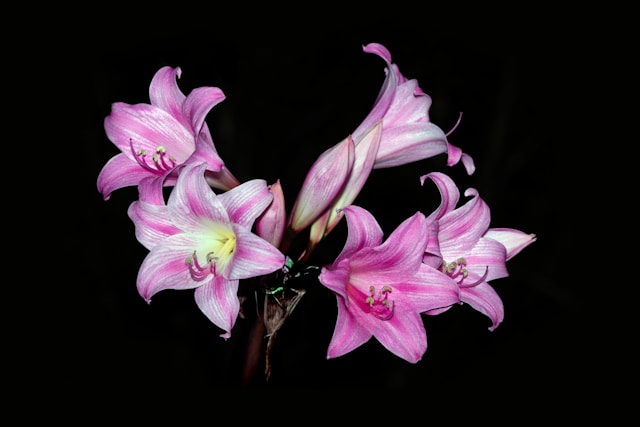
What it is
Amaryllis is a small group of bulb-forming plants best known for its big, attractive flowers. In the strict botanical sense, the name refers to a few species native to the Western Cape region of South Africa, especially around rocky areas between the Olifants River Valley and Knysna. The most familiar of these is "Amaryllis belladonna" — sometimes called "belladonna lily", "Jersey lily", "naked lady" or "March lily" because it often blooms around March in its native habitat.
There’s a bit of confusion around the name: in stores and garden centres around the world, plants labelled "amaryllis" are usually not true amaryllis but rather bulbs from a related group called "Hippeastrum", commonly grown for big winter blooms. True amaryllis are a distinct, South African genus, but the common plant sold for winter indoor flowers carries the same name in everyday use.
How it looks
True amaryllis grow from bulbs about 5–10 cm across. When they start growing, each bulb can send up one or two tall, leafless stems roughly 30–60 cm tall. At the top of each stem is a cluster of 2–12 funnel-shaped flowers that are usually white with crimson veins, although pink and purple forms exist in nature.
After flowering, long, strap-shaped green leaves appear. These leaves can be about 30–50 cm long and 2–3 cm wide and help the plant gather energy back into the bulb for the next season.
The flowers have six petal-like parts (three outer sepals and three inner petals), and seeds are usually round to slightly flattened and pale in color.
Where it came from
In the wild, amaryllis grow in the fynbos (shrubby heathland) of South Africa. In some places, the plant only flowers after fires clear out dense vegetation, while in sandy open spots it can bloom each year. The heavy seeds tend to fall near the parent plant and sprout quickly with the first winter rains.
The leaves usually emerge in autumn or early spring and die down by late spring, after which the bulb remains dormant until late summer. Amaryllis aren’t frost-tolerant and need a dry resting period between growth and flowering.
Cultivation and hybrids
Gardeners started growing amaryllis in the 18th century, and since then it has been planted around the world — especially in parts of the U.S. west coast, Great Britain, Australia and New Zealand where climates are similar to its native Cape region.
There are also hybrids bred over time, particularly in Australia, with flowers in shades of white, cream, peach, magenta and deep pink. These hybrids have larger or more varied blooms than the original species and can adapt to a wider range of conditions.