Clematis - the climbing flowering vine
By: Maggie & Pippa C.
Date: 6 March 2026
What it is
Clematis is a large group of perennial plants in the buttercup family. Most clematis are climbing vines, though some grow more like shrubs or groundcover — but the ones you commonly see in gardens are usually climbers that wind themselves up trellises, fences, verandas or even other plants. There are more than 370 species worldwide, with lots of cultivated varieties used in ornamental gardening.
Gardeners sometimes call clematis the "king of climbing plants" because of its popularity and the way the flowers can cover walls, arches or pergolas with colour. In many parts of the world — including Europe, North America and Asia — clematis has been grown since at least the 16th century, and hybrids have been developed to make the blooms even more impressive.
How it looks
Most clematis are vining plants that twine their stems or long leaf stalks around supports. Some species can climb several metres tall, easily covering structures. The leaves are usually opposite (paired along stems) and can be simple, divided into several leaflets, or twice divided depending on the type.
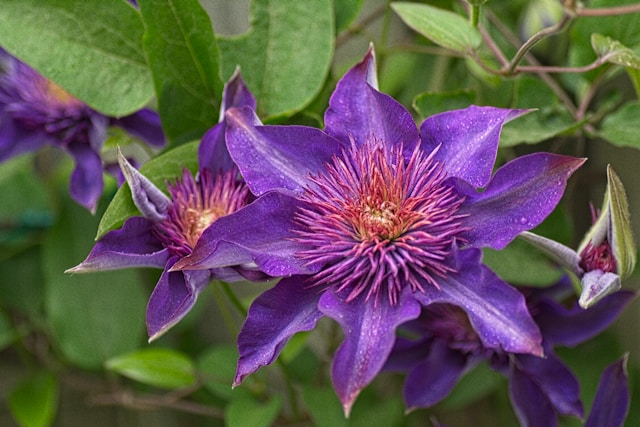
One of the things clematis is most loved for is its flowers. They come in a wild variety of shapes, sizes and colours. Some have large, single blooms, while others have semi-double or double flowers with many petal-like parts. The colours range from white and pink to purple, blue and even reddish tones, and many varieties hold their blooms for long periods in spring, summer or even autumn.
After flowering, the plant can produce lots of seed heads that look like soft, feathery balls — sometimes used in dried floral arrangements because they’re so decorative.
Where it is found
Clematis naturally grow in temperate regions of the world, especially across Asia, Europe and North America. In nature they can be found along forest edges, riverbanks, hillsides and shrublands, often climbing over other vegetation. They usually prefer well-drained soil and plenty of light — though some naturally occur in partial shade.
What it is used for
In gardens, they’re widely used to cover walls, screen fences, climb arbors and pergolas, or even trail across low supports. The climbing types are great for vertical accents, while low-growing or bushy varieties can fill in flowerbeds. Because so many cultivars exist, gardeners can choose plants that bloom at different times or match specific colour themes.
How to grow it
Garden clematis likes sunny to partly shaded spots and moderately rich, well-drained soil. Most vines appreciate having their roots cool and shaded, while the tops reach sunlight up trellises. Many can be propagated by seed or cuttings, and professional growers sometimes graft varieties onto hardy rootstocks to help them establish faster.
Different types bloom at different times — some in spring on older stems, others in summer or autumn on new growth — and learning when to prune them helps keep them healthy and blooming longer.