Let’s learn more about fiddle-leaf fig
By: Maggie & Pippa C.
Date: 12 March 2026
What it is
The fiddle-leaf fig is a tropical plant in the fig family that’s become famous around the world as a bold, decorative houseplant. You’ve probably seen it in photos of stylish living rooms or trendy offices — its large, violin-shaped leaves make a strong visual statement wherever it’s placed.
How it looks
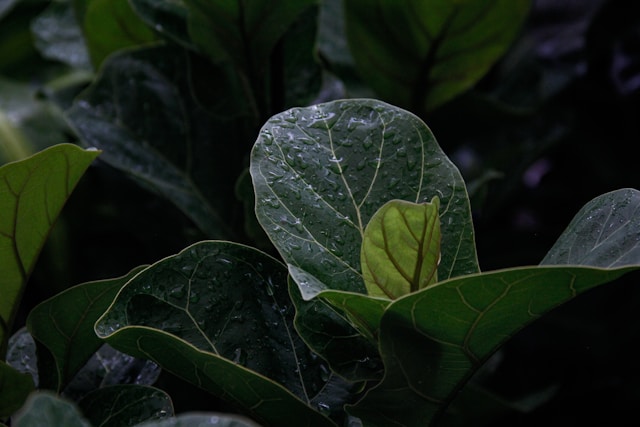
The fiddle-leaf fig can grow as either a tree or large shrub and is evergreen, meaning it keeps its leaves year-round. In the wild, it can reach heights of 10 to 16 m, and occasionally up to 25 m — much taller than most indoor versions. Its leaves are the showstoppers: big, glossy, and shaped a bit like a violin or fiddle, usually around 20–45 cm long and 12–28 cm wide, with wavy, smooth edges.
These leaves are arranged in a spiral pattern around the stem, giving the plant a lush, layered look. In outdoor tropical settings, the roots don’t always stay underground; the plant can start growing on other trees or even as a "strangler fig", but indoor plants don’t show that behaviour.
Where it came from
The fiddle-leaf fig is originally from tropical West and Central Africa — in countries like Benin, Nigeria, Cameroon, Gabon, Liberia, Sierra Leone and Togo — where it grows in rainforests with plenty of warmth and humidity. In those wild environments it can be part of dense forest communities along with other tropical trees and plants.
How to grow it
Because of its impressive look, it’s popular in tropical and subtropical parks and gardens, and in cooler regions it’s grown as an indoor plant or in greenhouses. In places with frost or cold winters, the fiddle-leaf fig is usually kept inside.
Indoors, the fiddle-leaf fig has become one of the most trendy plant choices. Many people like it because:
- Its large, architectural leaves add bold style to rooms.
- It can grow 2–4 m tall in a pot, making it more than just a small houseplant.
- It works well in hydroponic setups (grown without soil) in some cases.
But it’s worth noting that it’s not always the most forgiving plant. The foliage is sensitive to cold and drafts, so it prefers consistent warmth and bright, indirect light. Changing its location too often or exposing it to chilly conditions can cause stress. So while it’s beloved for its looks, it does need a bit more care than simpler houseplants.
Adults with small children might also want to be careful: parts of the plant are mildly toxic if eaten, and its sap can irritate skin, so people often keep it out of reach of kids and curious pets.