Taking a look at echinacea
By: Maggie & Pippa C.
Date: 16 March 2026
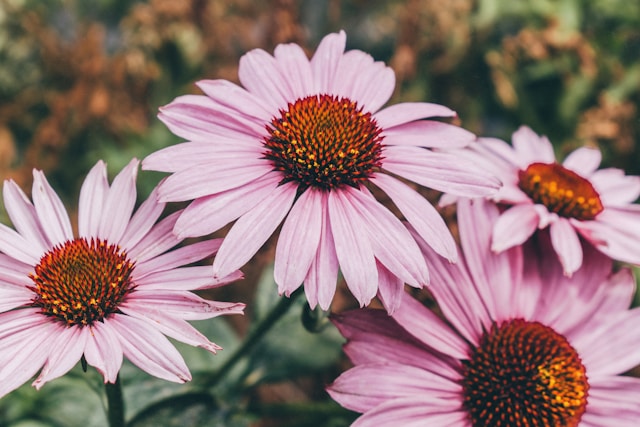
What it is
Echinacea, often called coneflower, is a group of flowering plants native to North America that’s become popular in gardens around the world. Most people know it for its cheerful daisy-like flowers with a big, spiky center cone and for being used in natural remedies, though in gardens it’s mainly grown just because it’s easy and looks good.
Wild echinacea grows in prairies and open woodlands, especially in the United States and parts of Canada. Because these plants evolved in fairly dry, open conditions, they’re used to full sun and well-drained soil, and that’s exactly what many gardeners give them.
How it looks
Echinacea plants usually grow as upright perennials — that means they come back year after year, and they don’t flop all over the place. Most species reach about 60–120 cm tall, though some can be a bit shorter or taller depending on the variety and conditions. Their stiff stems hold up the flowers well, which makes them great for cutting or letting stand in beds.
The leaves are usually rough and elongated, covered with tiny hairs that give them a bit of texture. The flowers are what most people notice first: a central cone — often orange or rusty brown — surrounded by drooping petals in shades of pink, purple, white or yellow. The contrast between the cone and petals gives echinacea its classic "coneflower" look.
Where it is found
In the wild, echinacea thrives on plains and in areas with a lot of sun. Because these plants are drought-tolerant once established, they’re a good fit for sunny borders, meadows, and naturalized patches in a garden. They also attract bees, butterflies and other pollinators, making them favourite choices for wildlife-friendly plantings.
Cultivation and hybrids
Gardeners grow many hybrids and cultivated varieties that have stronger colours, larger flowers, or longer blooming periods than many wild species. Some popular garden varieties can bloom from early summer into autumn if deadheaded and cared for.
How to grow it
Here are some tips on growing echinacea:
- Give it at least 6 hours of direct sunlight each day.
- Average garden soil works fine as long as it drains well.
- Water regularly early on, but once established, it tolerates dry periods.
- Most keep between 60–120 cm tall, so they work well in middle garden beds or mixed borders.
You can cut the stems for fresh bouquets, and even after flowering, the seed heads look decorative through autumn and into winter.