What is tulip?
By: Maggie & Pippa C.
Date: 12 February 2026
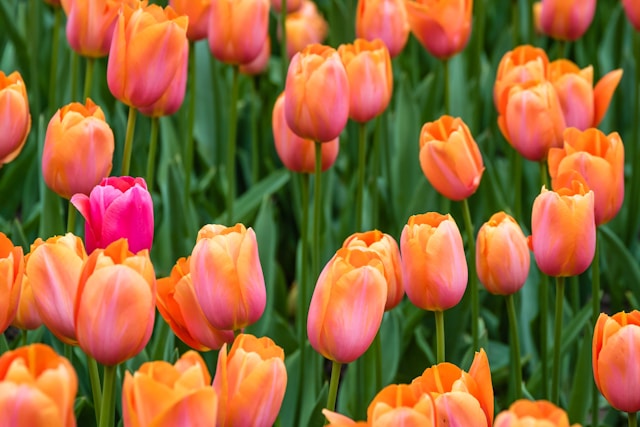
What it is
Tulips are flowering plants in the lily family (Liliaceae) that grow from bulbs and are among the most popular spring flowers in gardens around the world. They’re known for their simple but striking, cup-shaped blooms in a wide range of colours — red, pink, yellow, orange, white, purple, and mixes of these. True blue tulips don’t occur naturally, but almost every other colour has been developed through cultivation.
Wild tulips originally come from parts of Southern Europe, the Mediterranean, and Central Asia, where they grew in grasslands and open fields. From there, people began to cultivate and spread them across Europe, especially in the Netherlands, where tulips became incredibly popular in the 16th and 17th centuries. That period even saw "Tulip Mania", a time when bulb prices shot up and tulips became famous not just for their beauty but for their cultural impact as well.
How it looks
A typical tulip plant grows from a bulb — a round storage organ underground that helps the plant survive winter and then sprout in spring. When tulips emerge in spring, they send up a single stem with 2–6 leaves, usually shaped like long straps of green or bluish-green. Most garden types reach about 30–70 cm tall when in bloom, though wild species can be shorter.
The flowers themselves usually have six petal-like segments (three petals and three sepals that look the same), forming a neat cup or bell shape. These blooms often stand upright on the stem and open up when the weather warms, making tulips a classic sign of early spring.
Because they arise from bulbs, tulips die back after flowering — the leaves and stem wither once the bloom is done, and the bulb moves into a dormant stage underground until the next spring.
Variety
There are thousands of cultivated tulip varieties (called cultivars), many of which are bred from a species called Tulipa gesneriana. These varieties differ in things like:
- Flower shape — some are single and simple, others double or frilled.
- Bloom time — early, mid, or late spring.
- Height — compact garden types to taller stems suitable for cut flowers.
Wild tulip species are often smaller and hardier, and they’re great in rock gardens and naturalistic plantings.
Where it is found
Today, tulips are widely grown in gardens, parks, and fields from Europe to Asia and beyond. They’re also heavily associated with the Netherlands, one of the largest producers of commercial tulip bulbs in the world — even though the flowers themselves originally came from further east.
One more thing
Tulips bloom in spring, bringing colour to gardens after winter, and are loved for their simple, elegant form and variety of hues. Whether in flower beds, mixed borders, or large bulb displays, tulips are classic spring flowers that still capture attention and bring a sense of new beginnings.