Pachira glabra is not just a money tree
By: Maggie & Pippa C.
Date: 13 February 2026
Source | License | No changes were made.
What it is
If you’ve ever seen a plant with braided stems and shiny green leaves sold as a "money tree", you’ve probably crossed paths with Pachira glabra, or something very close to it. This tropical tree is both interesting and useful — it’s not just a pretty face in a pot, but a real plant with natural history and edible parts too.
Where it is from
Pachira glabra is native to eastern Brazil, where it grows along rivers and in wet lowland areas. In its natural habitat, it can become a fairly big tree — usually about 9–18 m tall, sometimes even taller under the right conditions. The trunk often gets wider near the bottom, giving it a sturdy, slightly bottle-like shape. In gardens and pots, it usually stays much smaller.
The plant belongs to the mallow family, the same family that includes hibiscus, cacao, and cotton, which might explain why its flowers and seeds are worth paying attention to.
How it looks
The leaves are one of the easy things to recognize: each leaf is made up of 5–9 glossy leaflets that spread out like a fan at the end of a stem. The overall effect is a tropical, lush look that works well indoors or in gardens.
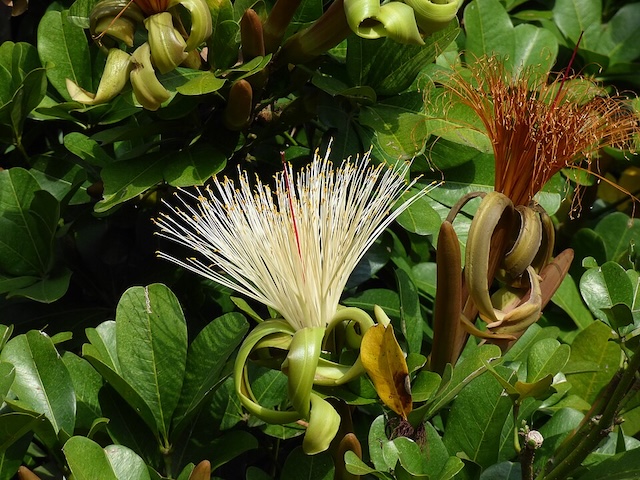
In summer or warmer months, Pachira glabra can produce big, white, fragrant flowers that open at night and fall off by the next day — a short show, but a memorable one. After flowering, the plant develops green seed pods, roughly 10–20 cm long, that split open to reveal around 10–25 seeds each about 2.5 cm wide.
It’s edible
In some parts of Africa and the Caribbean, the seeds of Pachira glabra are eaten as food. They’re nutritious — with about 16 % protein and 40–50 % fat — and can be boiled or roasted much like peanuts. Roasted seeds are even made into a warm drink in some places. The young leaves and flowers are also edible and used in local cooking.
This mix of decoration and traditional use makes Pachira glabra more interesting than a lot of plants that stay strictly ornamental.
How to grow it
Because it’s adaptable, Pachira glabra is often sold as a potted plant around the world — the classic "money tree" you see in homes and offices. It likes bright, indirect light but can handle some direct sun, and it’s fairly tolerant of different watering conditions as long as it doesn’t stay soggy. Being tropical, it doesn’t like frost, so in cooler places it’s best kept indoors or moved inside in winter.