Bamboo - what you need to know
By: Maggie & Pippa C.
Date: 10 February 2026
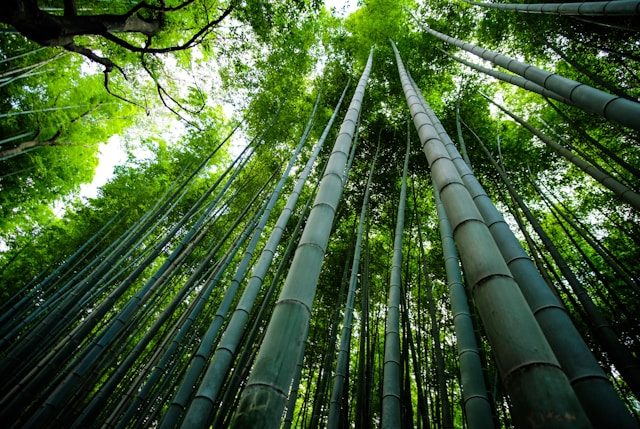
What it is
Bamboo refers to a large group of plants in the grass family. Even though most people think of bamboo as a kind of tree, it’s actually a type of grass — but one that can grow very tall and strong. There are about 1,200–1,250 species of bamboo in nature, and they vary a lot in size and shape.
There are generally two kinds of bamboo:
- Woody bamboos that form tall, sturdy stalks and look tree-like.
- Herbaceous bamboos that stay grassy and usually grow to less than 1 m tall.
Most bamboos you see in gardens, forests, or along roadsides are the woody kind — tall, hollow-stemmed grasses that look like slim trees.
Where it grows
Bamboo originally comes from tropical and subtropical regions, especially Asia, where dense bamboo forests are common. You can also find bamboo in the Americas, Africa, Australia and even parts of Europe. Some hardy species can grow in cooler climates too — for example, in parts of Central Europe, the Caucasus, and Crimea.
In the Andes Mountains, certain species grow even at high elevations — up to about 4,700 m above sea level — forming nearly impassable thickets.
How it looks
Bamboo stems, called culms, are usually hollow and cylindrical, and can vary hugely in size:
- Some types have thin stems only a few centimetres across, while more giant species can reach 30–40 m tall with stems up to 30 cm in diameter.
- Bamboo grows fast: some species can put on up to 0.75 m in height every day under ideal conditions.
Bamboo has long, narrow leaves and keeps its green foliage year-round, making it a common evergreen plant that stays attractive even in winter.
Flowers
One of the unusual things about bamboo is that it hardly ever flowers. Some species might only flower once every 20–100+ years, or even less often than that. When bamboo does bloom, it often happens over a large area at once — thousands of plants might flower, set seed, and then die. This strange lifecycle is still not fully understood by scientists.
How it is used
Bamboo isn’t just a plant that looks interesting — people use it in many practical ways:
- Food: Young bamboo shoots are eaten as a vegetable in many Asian cuisines. They have a firm, pale interior and are usually boiled before eating to remove bitterness or toxins.
- Construction: Bamboo stems are strong, lightweight and durable, so they’re used for building houses, bridges, water pipes, furniture and everyday tools.
- Decoration: In gardens, bamboo is used for fencing, privacy screens, terraces, and garden accents because it blends easily with other plants and stays green year-round.
- Objects and crafts: People make baskets, hats, chopsticks, musical instruments and more out of bamboo. It has played a role in traditional crafts for centuries.