Interesting things about edelweiss
By: Maggie & Pippa C.
Date: 6 February 2026
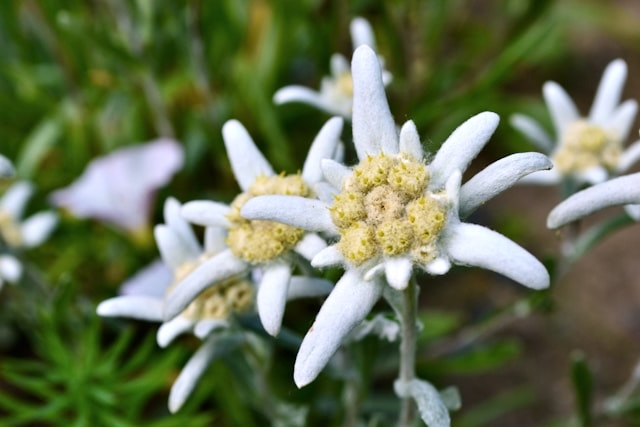
What it is
Edelweiss is a mountain-flowering plant in the daisy/sunflower family that grows naturally high up in the Alps and other European mountain ranges. The plant is famous for its small, fuzzy white blossoms that kind of look like snowflakes or little stars, which is part of why it’s so popular.
How it looks
At first glance, edelweiss looks like a cluster of white star-shaped petals, but those "petals" are actually bracts — leaf-like parts around the real tiny flowers. Those bracts and leaves are covered in fine hairs that make the whole plant look soft and woolly. In the wild, this helps protect it from strong sun, cold temperatures, and dry winds on high mountain slopes.
The actual flowers are small and yellow, and they sit in the middle of the fuzzy bracts. The plant itself is short — usually around 5–15 cm tall — and tends to grow in rocky limestone areas high above the tree line.
Where it grows
Edelweiss is best known from the European Alps, especially in countries like Switzerland, Austria, Germany, and Italy, though similar plants occur in other mountain regions too. It likes places where the soil is fast-draining (like rocky slopes) and the climate is more extreme — bright sun, cool nights, and few competing plants around.
Why it is well-known
Edelweiss isn’t just another mountain flower — it’s become a symbol of the Alps and a sign of rugged natural beauty. Its name comes from German: "edel" means noble and "weiß" means white, so the name literally suggests noble white.
This flower has shown up in poems, songs (like in The Sound of Music), and folklore about people braving mountain heights for love or adventure. In parts of Europe it’s also used in rock gardens and gardening displays because it’s iconic and looks cool even in small spaces.
How to grow it
Edelweiss is non-toxic and hardy, which makes it suitable for rock gardens and alpine plant collections. It’s a short-lived perennial in cultivation, so gardeners often grow it from seed or transplant small clumps to keep it going.
Growing it usually means giving it full sun, well-drained soil, and low fertilizer — basically conditions that mimic its native mountain home.