Taking a look at wisteria
By: Maggie & Pippa C.
Date: 18 February 2026
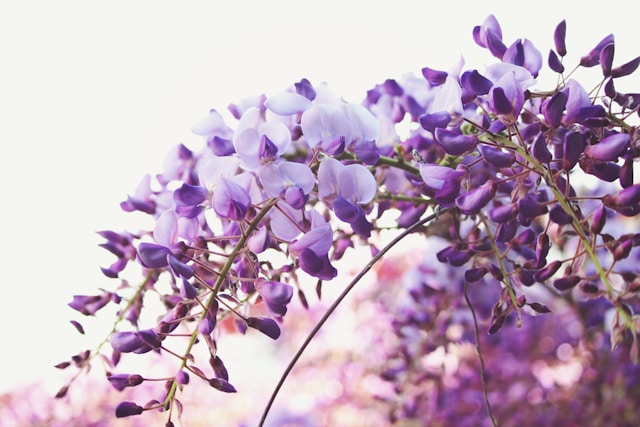
What it is
Wisteria is a group of flowering climbing plants in the pea family. These plants are mostly woody vines that grow by winding their stems around supports like trees, pergolas, trellises or garden posts. They’re best known for their cascading clusters of fragrant flowers that look a bit like purple rain pouring down.
Where it came from
There are a few main species of wisteria that people grow in gardens:
- Chinese wisteria (Wisteria sinensis) — native to parts of China and widely grown around the world.
- Japanese wisteria (Wisteria floribunda) — from Japan, famous for very long flower clusters.
- American wisteria (Wisteria frutescens) — native to the eastern United States and popular in North American gardens.
Wisterias have also been introduced across Europe and other parts of the world because of their decorative beauty and their ability to brighten up garden walls and arches.
How it looks
Wisteria vines can grow very long — often 10–20 m or more when they have something to climb. They have compound leaves — meaning each leaf has many smaller leaflets — usually 10–30 cm long, and the plant can spread laterally over wide areas if it has good support.
The most striking feature is the flower clusters (called "racemes"). Depending on the species and variety, these drooping flower groups can range from short 10 cm ones to stunning long clusters 90 cm or even 120 cm on some Japanese cultivars. The flowers come in shades of purple, violet, lilac, pink or even white, and many have a sweet, grape-like scent.
How it grows and when it blooms
Wisteria plants typically bloom in spring (just before or as the leaves open) in many Asian species, and sometimes in mid to late summer for American types. The blooms appear before the leaves, which makes the floral display even more dramatic.
Because wisteria vines get heavy and vigorous as they mature, they need strong support — light trellis work or thin posts often aren’t enough. On sturdy pergolas or walls, however, they can create beautiful curtains of flowers year after year.
Caution
All parts of most wisteria plants contain a compound called wisterin, which is toxic if eaten. Seeds and pods in particular can cause symptoms like nausea and upset stomach if pets or children swallow them, so caution is recommended if wisteria is planted where young ones play.