Learn more about olive
By: Maggie & Pippa C.
Date: 21 February 2026
What it is
Olive trees are evergreen trees originally from the Mediterranean region, including places like southern Europe, North Africa and parts of the Middle East. They’re well known for the small oval fruits they produce — olives — which are used for food and, especially, for making olive oil, one of the most famous and widely used cooking oils in the world.
Olive trees have been connected to human culture for thousands of years. People started growing olives at least around 3000 BCE, and by ancient Greek and Roman times they were a major crop in the Mediterranean. Today, olives and olive oil are central to Mediterranean cuisine, loved for their flavour and traditional health benefits.
How it looks
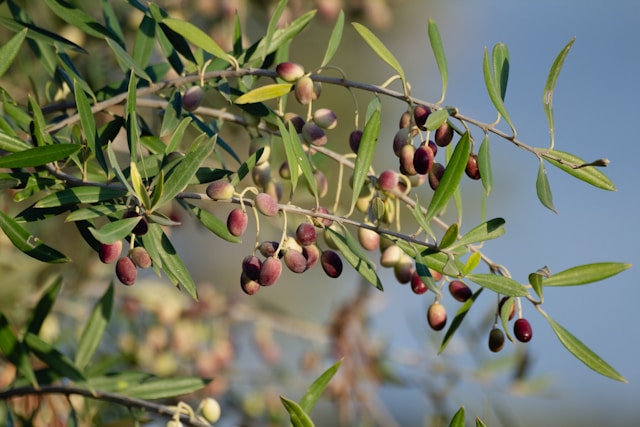
Olive trees are usually medium-sized, often reaching 5–12 m tall, although some older trees can grow taller or spread wider with a broad, twisting trunk. The leaves are narrow and leathery, dark green on top and paler or slightly silver underneath, which gives the tree a distinctive look in gardens or groves.
In late spring (around May–June), olive trees produce small, pale flowers in loose clusters. Each flower is only a few millimetres wide, but together they create a nice floral display that leads to fruit development. The fruits start off green and, when ripe, turn a deeper colour — often black or dark purple — in autumn or early winter.
Its fruit
The fruit itself is a type of drupe — the same family category as peaches or plums — but olives are much smaller, usually about 1–3 cm long. Fresh olives straight off the tree are very bitter, so they’re usually processed or cured before eating. That process can involve brining or treating them to reduce bitterness.
Most olives grown around the world are used to produce olive oil, which makes up about 80 % of global olive production. The rest are eaten as table olives after curing. Olive oil is pressed from ripe olives and is prized for its taste and versatility in cooking, salad dressings, and even cosmetics.
Where it is grown
Olive trees thrive in warm, sunny climates with dry summers and mild winters — the kind of weather found around the Mediterranean Sea. That said, people grow them in many other regions today that have similar conditions. They don’t like waterlogged soil but can handle rocky or well-drained ground.
Did you know?
One interesting thing about olive trees is how long they can live. Some olive trees in the Mediterranean region are centuries old — even thousands of years in a few famous cases — and can still produce fruit.
How to grow it
Growing an olive tree takes patience. Young trees may take a few years (often 4–8 years) before they start producing fruit, and they usually take over 10 years to reach full production. They like full sun, well-drained soil, and don’t need a lot of water once established — in fact, too much water can harm them.
Olive trees can be pruned to shape them and help sunlight reach the centre of the canopy, and they’re sometimes grown as ornamental trees in gardens because of their silvery leaves and elegant form.