The feather-like pampas grass
By: Maggie & Pippa C.
Date: 23 February 2026
What it is
Pampas grass is a tall, ornamental grass originally from the Pampas plains of southern South America — mainly countries like Argentina, Brazil and Uruguay. It gets its name from the flat grasslands called the "pampas", where it grows naturally. The species most often talked about is a big, ornamental grass known for its dramatic plumes and clumping habit.
How it looks
In its natural form, pampas grass is a perennial grass that can grow up to about 3 m tall or even more under good conditions. The plants grow in dense clumps of long, narrow leaves that often reach 1–2 m long and about 1 cm wide. The leaves arch out from the base and have very sharp edges, so be careful handling them with bare hands.
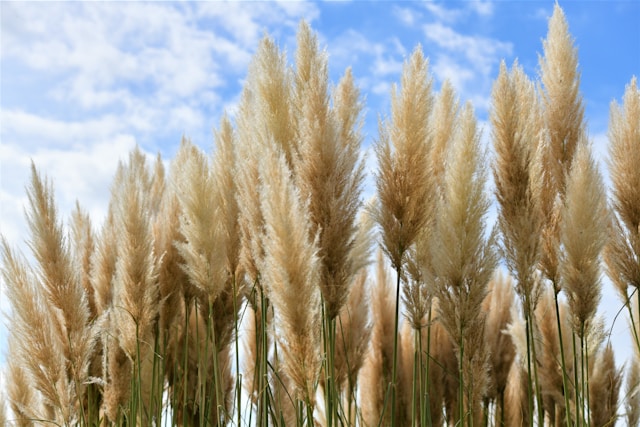
In late summer and autumn (often August–November in many regions), pampas grass develops large, fluffy flower heads that rise on stems often 2–3 m high above the foliage. These flower clusters (plumes) can be 20–40 cm long and are usually white or silvery-white, though there are also rare forms with yellow, reddish or purplish tones. These plumes can be dried and used in decorative arrangements.
Where it came from
Pampas grass is native to the grassy plains of South America, but people have grown it all over the world as a decorative garden plant — in Europe, North America, Australia and other regions. It adapts well to a wide range of climates and soils and is hardy in both dry and moist conditions.
Because it produces so many seeds — sometimes more than a million seeds per plant — and spreads easily, it has become invasive in some places like California, Hawaii, New Zealand and South Africa, where it can crowd out native plants and disrupt local ecosystems. In some areas, selling or spreading pampas grass is restricted or banned.
What it is used for
Many gardeners like pampas grass for its striking, feathery plumes and for the texture it adds to a landscape. It’s often used as a focal point, as a privacy screen, or just as a bold accent in a garden because of its size. The dried plumes are also popular in floral arrangements and home décor.
There are also cultivated varieties that are smaller, which reach about 2 m tall and can fit better in smaller landscapes, and have distinctive leaf colours or plume shapes. One popular form has yellow-tipped leaves, and another is prized for very full flower heads.
Things to keep in mind
Pampas grass leaves can be very sharp, so wear gloves and protective clothing when trimming or moving it. Also, because it seeds so readily and spreads, it can become a nuisance in wild areas or gardens where you don’t want it to take over.