Learn more about iris
By: Maggie & Pippa C.
Date: 13 January 2026
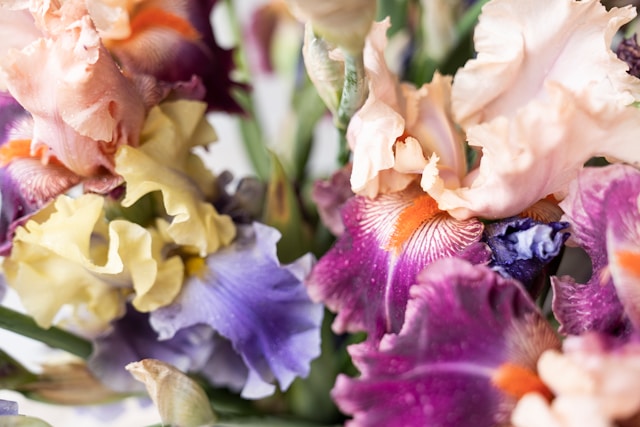
What it is
The Iris genus is a group of flowering plants in the Iridaceae family, and it includes some of the most iconic garden flowers you’ve likely seen. The name "Iris" comes from Greek mythology — "Iris" was the goddess of the rainbow, which makes sense because irises come in so many colors.
Even though lots of people mix up names like "iris" and "sweet flag", they’re totally different plants botanically. Irises belong to their own family in the Asparagales order.
How it looks
Most irises are perennial plants — meaning they come back year after year — and they grow from either rhizomes (thick underground stems) or bulbs. Their leaves are typically long and sword-shaped, which is part of why gardeners love them; they create a striking, architectural look even before the flowers open.
Flowers on iris plants are pretty distinctive:
- They have six petal-like parts — three are usually upright (the "standards") and three droop down (the "falls").
- The design of the flower helps attract pollinators like bees.
- Irises come in lots of colors — blues, purples, whites, yellows, and mixes of these.
While individual blooms may only last a few days, a clump of irises can produce multiple flowers in a season, making them great for gardens and floral displays.
Where it grows
Wild irises are found across temperate regions of the Northern Hemisphere, especially in Europe, Asia, and North America. Different species have adapted to a wide range of habitats — from moist meadows and pond edges to rocky hillsides and gardens.
In Japan, there are several native and naturalized species, including Iris japonica and Iris ensata (Japanese water iris), and other types like Iris laevigata and Iris sanguinea. Many of these have been important in Japanese gardening traditions for centuries.
What are its well-known varieties
Irises are especially popular in gardens because they’re colorful, hardy, and come in many varieties. Some well-known types gardeners love include:
- Bearded irises — tall, showy flowers with fuzzy "beards" on the petals, common in many classic garden designs.
- Japanese irises — flatter, often larger flowers, popular around ponds and water features.
- Dutch and hybrid irises — bred for strong color, early blooms, and long stems for cutting.
What are its uses
Besides their decorative appeal, irises have been used historically for making orris root, a fragrant base used in perfumes and potpourri.