Charms of the classic daisy
By: Maggie & Pippa C.
Date: 24 May 2026
What it is
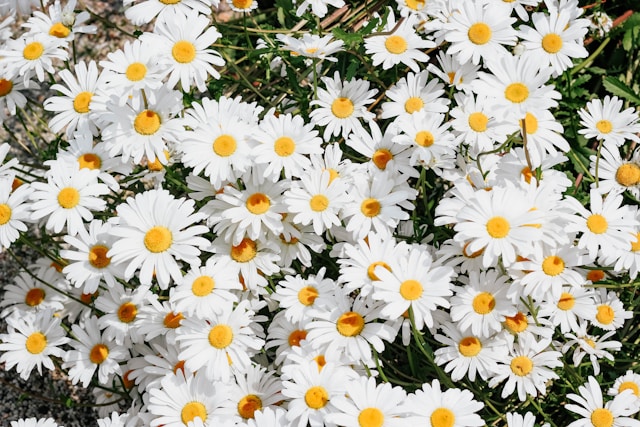
Daisies are small perennial wildflowers known for their simple shape and bright look. They are familiar sights in lawns, meadows and cottage gardens in many temperate regions. With a yellow center and white petals, these blooms have become a symbol of cheerful, natural beauty. Gardeners and nature lovers alike enjoy them for their effortless charm and effortless spread.
How it looks
Daisies form a low rosette of green leaves close to the ground and usually reach about 10–20 cm tall. Each flower has a round yellow center made up of many tiny florets, surrounded by a circle of flat white petals. Some cultivated types show soft pink tinges too. Individual blooms are typically about 2–3 cm across and sit atop slender stems that rise just above the leafy base. Together, they create a soft carpet of small, cheery flowers.
Where it is from
Daisies originate from cooler and temperate parts of Europe, especially grasslands and open fields. Over time they have spread to many other continents, including North America and Australasia, and now grow wild in lawns, parks and roadsides far beyond their native range. Their ability to handle mowing and mild trampling has made them a familiar sight across many landscapes.
How to grow it
Growing daisies is fairly simple. They do best in full sun but will tolerate some light shade, and they like soil that stays moist without becoming waterlogged. Sow seeds in spring or early autumn, or plant young plants once frost risk is low. Daisies can self-seed and spread gently, so removing faded blooms can keep the patch from getting too crowded. With the right conditions they can bloom from spring well into autumn.
What it is used for
Daisies are mostly grown for their pretty flowers and ground-cover effect. They brighten lawns, borders, rock gardens and containers, and attract bees and other pollinators. In the past, young daisy leaves and petals were sometimes eaten in salads or made into tea, but in modern gardens they are usually grown for ornamental value rather than food or medicine.
Interesting facts
The name "daisy" might come from "day’s eye" because the flower opens with daylight and closes at night. Daisies are often among the first flowers to appear in spring and can keep blooming into autumn where conditions are mild. They also feature in many childhood games and cultural traditions, such as making daisy chains or plucking petals while saying phrases like "loves me, loves me not." Their simple, familiar shape has made them a favourite in poems, songs and art celebrating nature’s uncomplicated beauty.